.png)
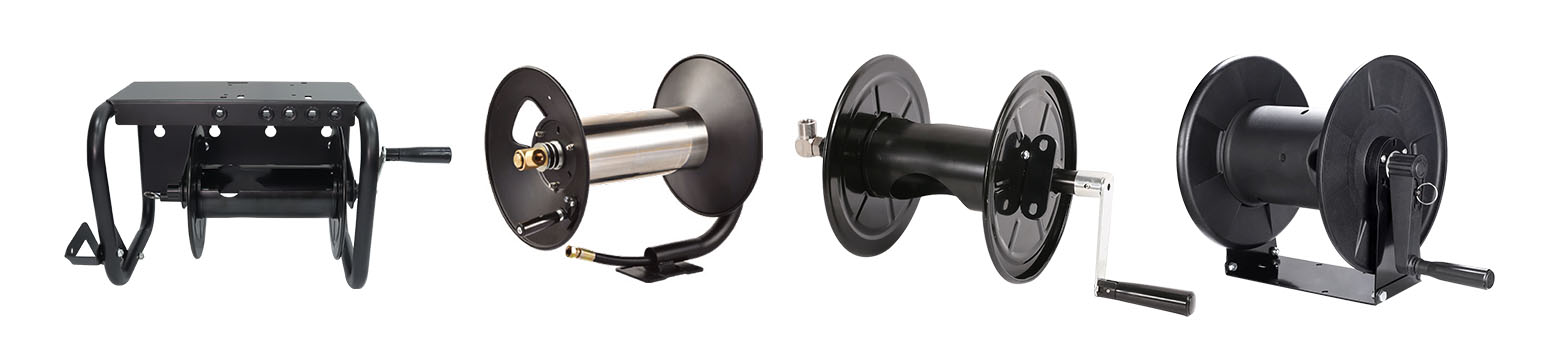
Commercial cleaning operations are becoming more focused on workflow efficiency, equipment protection, and safer job-site organization. As pressure washing services expand across property maintenance, vehicle cleaning, construction, and facility management, buyers are paying closer attention to the supporting equipment around the washer itself. Industry discussions in 2026 also point toward smarter and more efficient cleaning equipment as an important direction for professional operators. For distributors and engineering teams, choosing the right Commercial Pressure Washer Hose Reel is therefore less about simple hose storage and more about controlling the way equipment is used throughout a working day.
Where Does Hose Management Affect Productivity?
A pressure washer can deliver the required cleaning performance, but a poorly managed hose can make the overall operation harder to control. Hoses left across walkways may become tangled, kinked, stepped on, or exposed to vehicle and equipment movement. These conditions can increase handling time while accelerating wear.
A properly selected reel keeps the hose organized and positioned closer to the working area. For commercial operators, this can make setup, movement between cleaning zones, and end-of-job storage more consistent without changing the pressure washer itself.
Choose the Reel Around the Working Environment
Not every commercial cleaning application places the same demands on a hose reel. A mobile pressure washing contractor may need portability, while a vehicle wash facility or industrial cleaning station may prioritize fixed installation and convenient hose access.
Before purchasing, buyers should assess:
- whether the reel will be mounted on a wall, vehicle, cleaning cart, or equipment frame;
- hose length and outside diameter;
- operating pressure and temperature requirements;
- frequency of extension and retraction;
- available installation space and hose routing.
These details help prevent a common procurement mistake: selecting a reel based only on hose capacity while overlooking the actual operating environment.
Why Hose Compatibility Matters More Than Appearance
A reel and hose should be treated as one working system. The reel needs to accommodate the hose dimensions and operating requirements without creating excessive bending or mechanical stress.
For manufacturers, this means considering drum geometry, swivel connections, mounting structure, inlet and outlet configuration, and the way the hose moves during extension and retraction. A compact design may be attractive for limited spaces, but it should still provide suitable clearance for the hose and connection components.
This is particularly relevant when buyers are developing private-label pressure washing equipment. Matching the reel to the complete cleaning system at the engineering stage can reduce compatibility problems during assembly.
Retraction Control Can Improve Daily Handling
For professional users, hose retraction is not simply a storage function. The way a hose returns to the reel affects handling, workspace organization, and operator convenience.
Depending on the application, buyers may evaluate manual, spring-driven, or other retraction configurations. The appropriate choice depends on hose length, installation position, usage frequency, and operator expectations rather than assuming one mechanism fits every commercial application.
A well-designed system should guide the hose smoothly and avoid unnecessary twisting or uncontrolled movement. This becomes particularly valuable when operators repeatedly move between different cleaning points during a shift.
Safety Starts With the Hose, Not Just the Washer
Pressure washing involves high-pressure water and potentially wet, busy working environments. Safety guidance for commercial operators emphasizes inspecting hoses, fittings, work areas, and other equipment before operation.
Hose management can support this process by keeping the line more visible and reducing unnecessary hose accumulation around walking and working areas. However, a reel does not replace routine inspection. Operators should still check for visible damage, worn connections, leaks, and other signs that a hose or fitting requires attention.
What Should Manufacturers Provide to B2B Buyers?
For procurement teams, technical transparency can be more useful than a long list of marketing features. A reliable supplier should clearly define the reel’s operating conditions and compatibility requirements.
From our manufacturing perspective, important information includes hose specifications, pressure and temperature ratings, mounting options, material selection, surface treatment, connection details, packaging, and inspection procedures. For customized projects, drawings and approved samples should be established before bulk production so that engineering and purchasing teams share the same reference.
Turning Hose Storage Into a System-Level Advantage
The role of a hose reel is easy to underestimate because it sits behind the main pressure washer. Yet better hose organization can influence equipment handling, workspace management, maintenance routines, and the overall user experience. With pressure washing businesses placing greater attention on efficient professional workflows, the reel should be selected as part of the complete cleaning system rather than as an afterthought. For distributors, equipment manufacturers, and commercial cleaning contractors, a properly engineered Commercial Pressure Washer Hose Reel can provide a practical way to improve hose management while supporting safer and more consistent daily operation.